
“IS THIS THE BEGINNING OF THE END?” STARMER UNDER FIRE AS MP’S ‘FINAL PMQs’ QUESTION IGNITES POLITICAL FIRESTORM
Viral Commons clash sparks rumours of leadership crisis – but what really happened behind the explosive Westminster moment?
A dramatic clip circulating online has set Westminster chatter ablaze after an MP was seen challenging Sir Keir Starmer during Prime Minister’s Questions with a loaded question that many are now calling politically “devastating” — and others are dismissing as typical parliamentary theatre amplified for clicks.
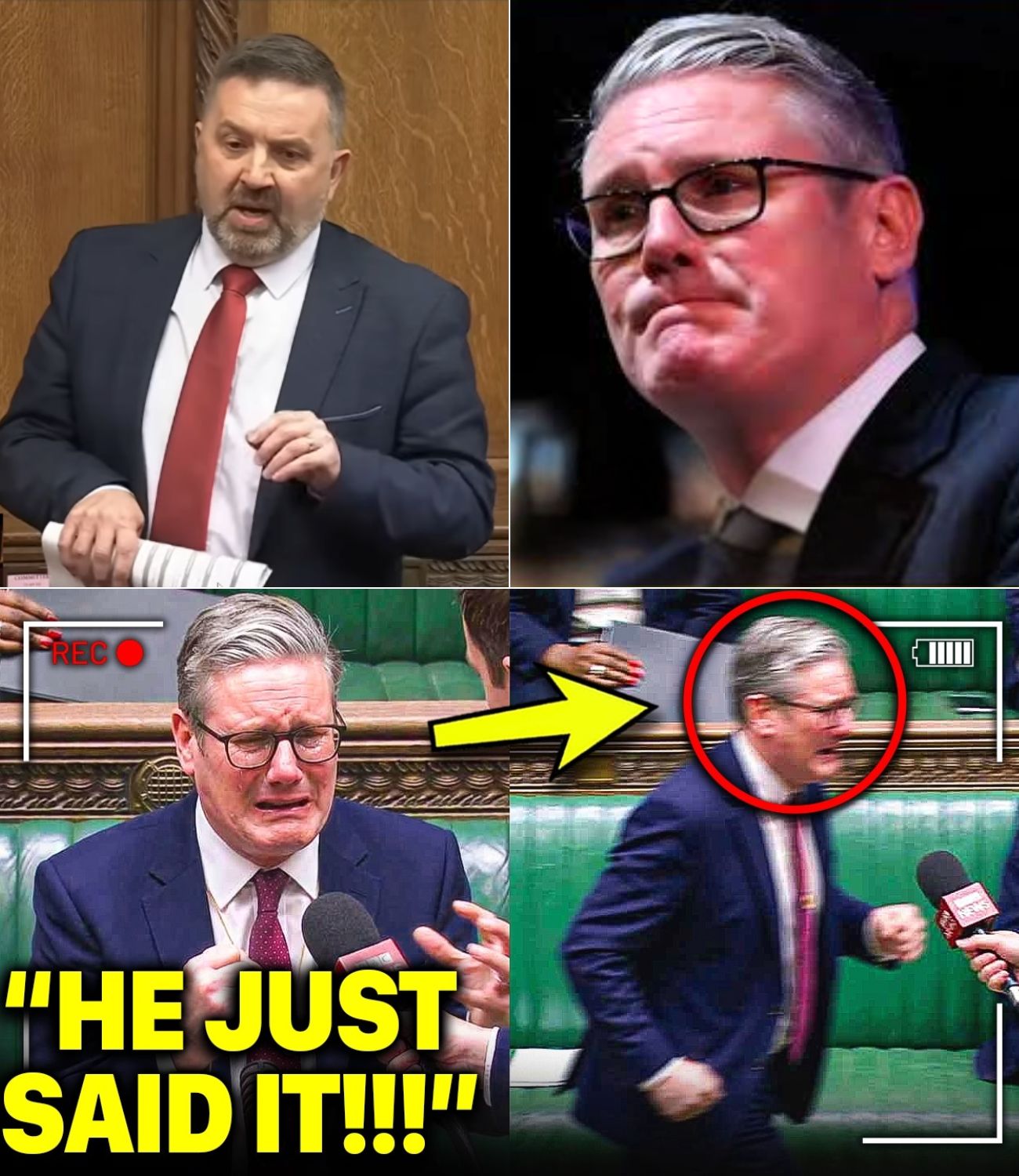
In the footage, Conservative MP Robin Swann appears to ask whether this could be the Prime Minister’s “last Prime Minister’s Questions,” before launching into a stinging list of grievances involving farmers, WASPI women, Northern Ireland veterans, and victims of the Troubles.
The moment has been widely shared with sensational captions claiming Starmer “completely broke down live,” though the actual exchange inside the Commons shows a far more familiar scene: a tense PMQs confrontation, a barrage of criticism from the Opposition benches, and a Prime Minister sticking rigidly to his prepared talking points.
Still, in today’s hyper-charged political media environment, perception often travels faster than fact.
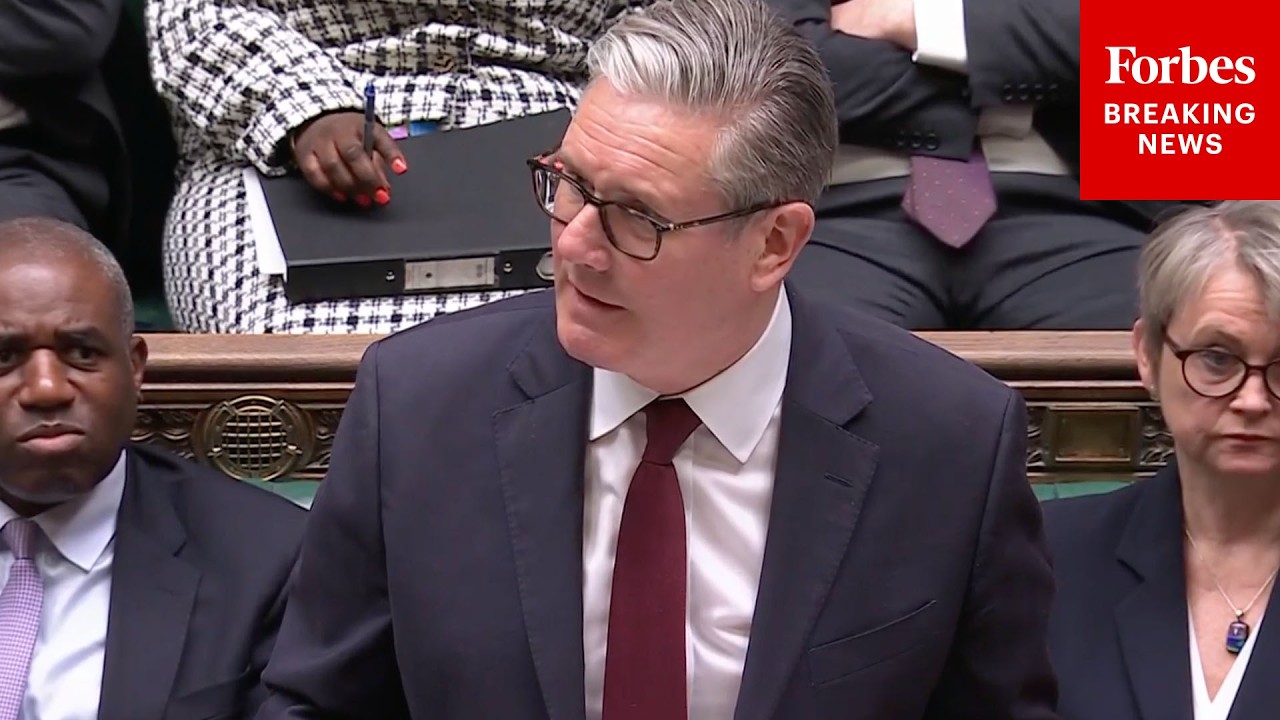
“LAST PMQs?” – A QUESTION THAT ELECTRIFIED WESTMINSTER
The controversy centres on Swann’s opening line, which framed the session as potentially the Prime Minister’s final appearance at PMQs.
That alone was enough to send political commentators into overdrive.
While Swann did not explicitly claim Starmer was about to resign or be removed, the phrasing was interpreted by some viewers as a symbolic warning shot — a suggestion that confidence in the Government is beginning to erode inside Parliament itself.
He went on to raise a series of politically sensitive issues:
- Alleged failures affecting WASPI women
- Pressure on farmers
- Concerns raised by Northern Ireland veterans
- Victims of the Troubles
Swann then asked whether the real issue was that those around Starmer were “more interested in themselves than the country.”
It was a line designed to land heavily — and it did.
But as with most PMQs exchanges, the Prime Minister’s response told its own story.
STARMER’S RESPONSE: CONTROLLED, SCRIPTED, UNMOVED
Rather than engaging directly with the accusation that “something has gone wrong,” Sir Keir Starmer returned to familiar territory.
He highlighted Labour’s record on:
- Workers’ rights reforms
- Renters’ protections
- Efforts to reduce child poverty
He insisted these policies represented “real change” for working people across the UK and said the Government would continue delivering on its agenda.
To supporters, it was a steady, disciplined response under pressure.
To critics, it was something else entirely: avoidance.
Opposition voices quickly argued that the Prime Minister had not answered the question being asked — namely, why public confidence appears strained only months into Labour’s term in office.
ENERGY, BILLS AND THE COST OF LIVING: THE REAL BATTLEGROUND
While the PMQs moment grabbed headlines, another Commons exchange has added fuel to the fire: a heated debate on energy policy and household bills.
Conservative MP Joe Robertson launched a sharp attack on Labour’s record, focusing on one of the most politically sensitive issues in British life — the cost of energy.
He pointed to Labour’s election pledge that household energy bills would fall by around £300, contrasting it with claims that bills have instead increased.
Robertson argued that energy is not an abstract policy debate but a daily reality:
- Pensioners choosing between heating and eating
- Families watching direct debits rise
- Small businesses struggling with overheads
- Renters absorbing higher living costs
In political terms, it is one of the most powerful arguments available — because it moves the debate from Westminster rhetoric to kitchen-table reality.
Labour, however, has repeatedly argued that global pressures are the real driver of high energy costs, citing:
- International gas and oil price volatility
- The impact of war in Europe
- Long-term energy market instability
But critics say this defence only goes so far when voters were promised clear, domestic solutions.
THE GREEN POLICY DIVIDE
The debate also reignited tensions over the UK’s net zero strategy, with Conservative MPs attacking what they described as “green levies” pushing up bills.
Robertson and others argue that climate policy costs are being passed directly to consumers, disproportionately affecting low and middle-income households.
Supporters of the Government’s approach insist that:
- Investment in renewables is essential for long-term stability
- Short-term costs are unavoidable during transition
- Failure to decarbonise would lead to even greater economic risk
But politically, the messaging problem remains.
When voters are told that policies will reduce costs — and bills rise instead — trust becomes the first casualty.
A GOVERNMENT UNDER PRESSURE OR JUST NORMAL POLITICS?
Inside Westminster, there is disagreement over how to interpret the tone of recent exchanges.
Some MPs say heated PMQs sessions are nothing new and that opposition parties routinely use dramatic language to score points.
Others acknowledge a more uncomfortable reality: that Labour is now being forced onto the defensive earlier than expected in its governing cycle.
The concerns being raised repeatedly include:
- Cost of living pressures not easing quickly
- Disputes over energy strategy
- Political fallout from policy transitions
- Internal expectations versus public perception
Still, there is little evidence of any formal leadership challenge or internal party instability.
The idea of a “final PMQs” remains rhetorical — not procedural.
THE REAL STORY: NARRATIVE VS REALITY
The most striking feature of the viral clip is not necessarily what was said, but how it has been framed online.
Titles claiming Starmer “broke down” or that this is the “beginning of the end” reflect a broader trend in political media: turning routine parliamentary exchanges into dramatic turning points.
In reality, PMQs is designed for confrontation. Every Prime Minister, regardless of party, faces hostile questioning, sharp rhetoric, and theatrical claims about leadership collapse.
What matters more is whether those moments reflect a genuine shift in political power — or simply the noise of Westminster at work.
SO, IS STARMER REALLY IN TROUBLE?
At present, there is no indication of an imminent leadership challenge, resignation, or internal Labour revolt.
But the political pressures are real:
- Cost of living remains a dominant public concern
- Energy policy remains controversial
- Opposition attacks are becoming more coordinated
- Expectations of rapid improvement are high
For Starmer, the challenge is less about surviving PMQs — and more about controlling the wider narrative outside the chamber.
Because while Westminster debates continue in scripted exchanges and procedural sparring, voters are focused on something far simpler:
Whether life is getting better — or just more expensive.
And that question, unlike a PMQs soundbite, cannot be answered with a prepared speech.
Disclaimer : This content may be created by AI for entertainment purposes. Any resemblance to real persons, events, or places is coincidental.
